
Religions and Society Department

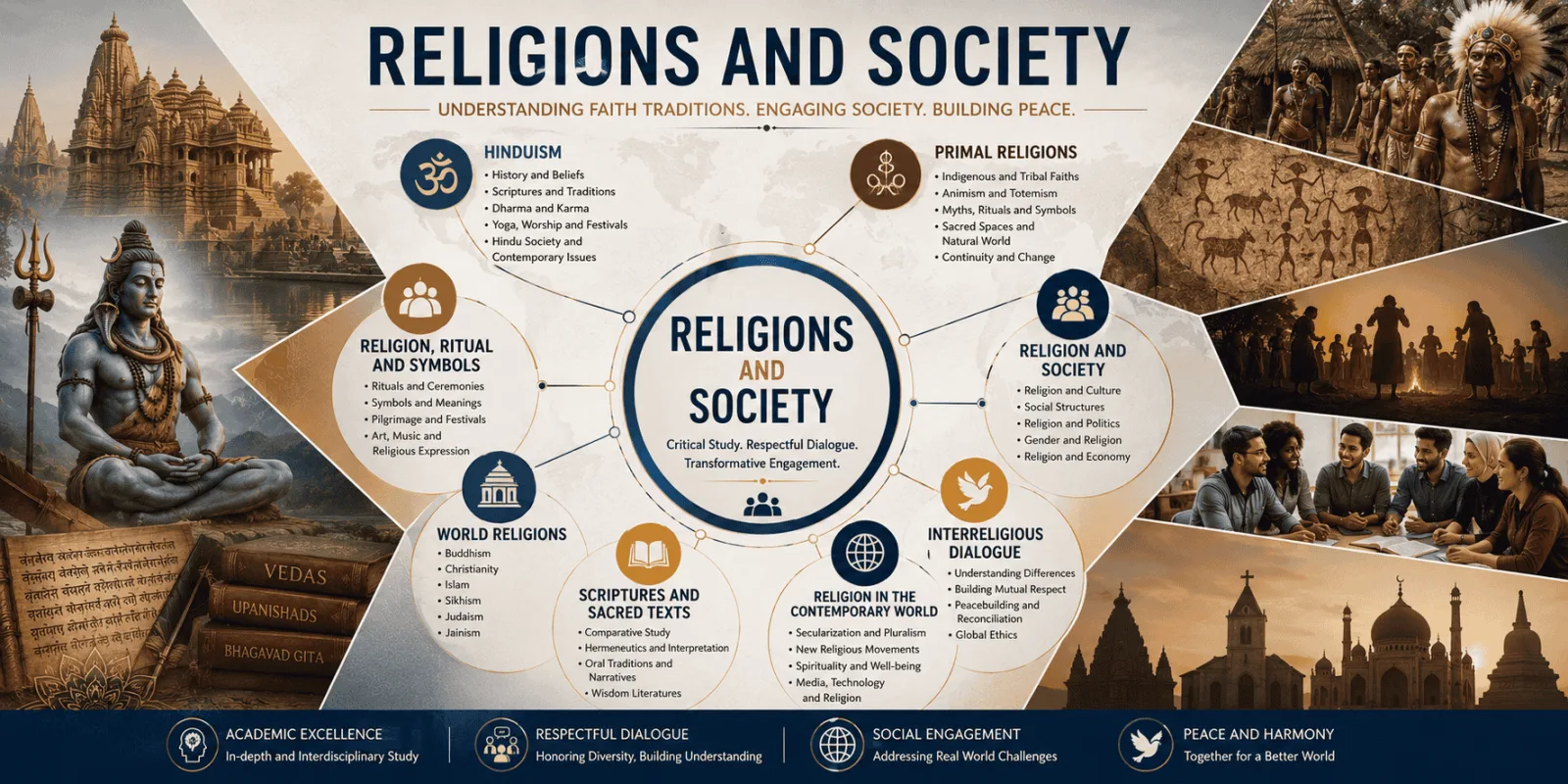
The Department of Religions and Society fosters understanding of world religions, interfaith relations, social realities, and the role of religion in shaping contemporary communities.

Religions and Society Department

Overview

The curriculum includes World Religions, Tribal Religions, Philosophy of Religion, Sociology of Religion, Interreligious Dialogue, and Religion in Contemporary Society.

Programme Outcomes

Students will:

Understand major religious traditions.

Engage in meaningful interfaith dialogue.

Analyze religion's impact on society and culture.

Promote peace, justice, and mutual understanding.

Courses and Duration

B.D.: Integrated within the programme

M.Th. (Primal Religion / Hinduism): 2 Years

Eligibility

B.D. with B Grade (60%) or above.

Explore More

Other Departments

View All Departments

<p>B.D.: Integrated within the programme</p><p>M.Th. (Old Testament): 2 Years</p><p>D.Th. (Old Testament): 3 Years</p>

Old Testament Department

The Department of Old Testament equips students to study the Hebrew Scriptures in their historical, literary, theological, and contemporary contexts. The department seeks to deepen understanding of God's covenant relationship with humanity and the relevance of Old Testament faith traditions for the Church today.

View details

<p>B.D.: Integrated within the programme</p><p>M.Th. (New Testament): 2 Years</p><p>D.Th. (New Testament): 3 Years</p>

New Testament Department

The Department of New Testament focuses on the life, teachings, death, and resurrection of Jesus Christ, the witness of the apostles, and the growth of the early Church. The department aims to strengthen biblical scholarship and Christian discipleship.

View details

<p>B.D.: Integrated within the programme </p><p>M.Th. (Christian Theology): 2 Years </p><p>D.Th. (Christian Theology): 3 Years</p>

Theology and Ethics Department

The Department of Theology and Ethics engages students in the systematic study of Christian faith, doctrine, and theological reflection. It encourages contextual and ecumenical theological engagement for church and society.

View details